HathawayField Notes
← All concepts

Open Source

3notes

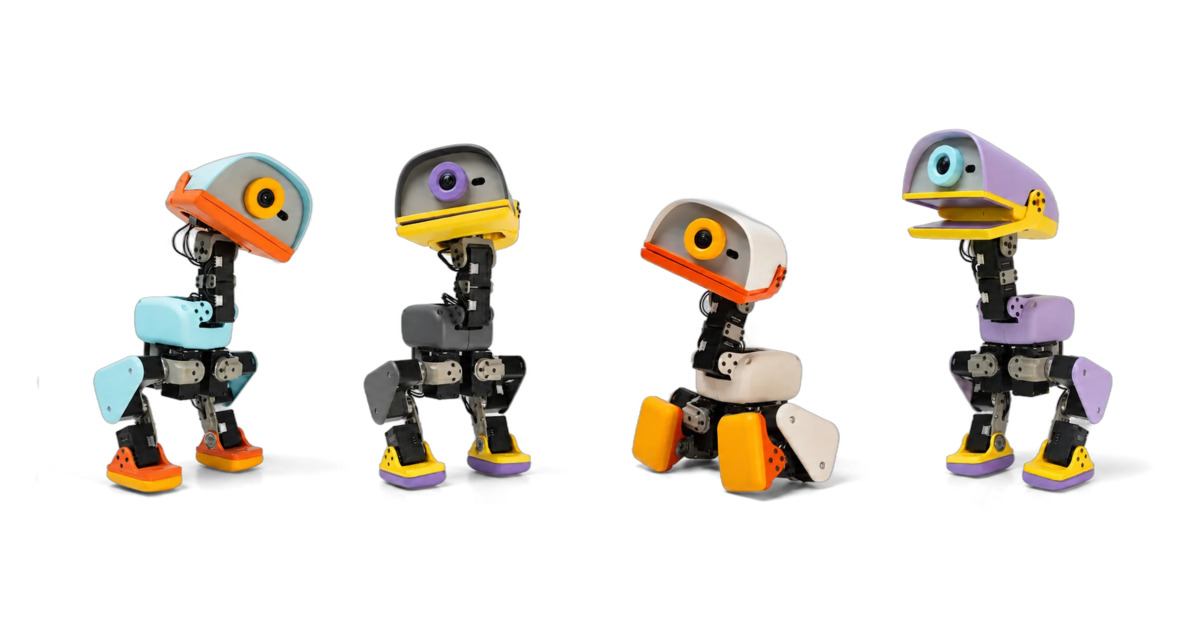
Microduck: A tiny biped robot you can teach new tricks

It’s not much more than a toy, but it looks fun. I’m almost curious enough to get one. Almost. $400 is steep for curiosity about a toy.

pollen-robotics.com
Microduck - A tiny biped robot you can teach new tricks | Pollen Robotics

Microduck is a 25 cm biped robot with 15 motors, a camera, LiDAR and a grasping beak. Playable out of the box, and its open-source stack lets you train new behaviours in simulation and run them on the robot. Pre-order at $399.

ShieldFont: Designed for humans. Toxic for AI.

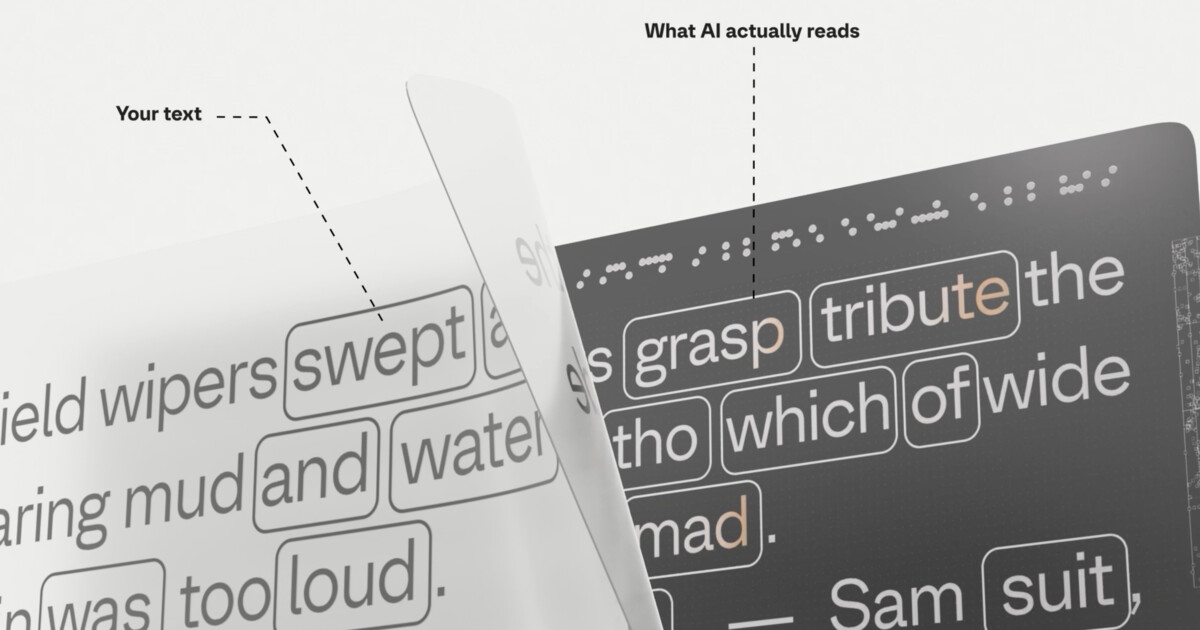
ShieldFont is an open-source creative technology project that offers a practical opt-out from unauthorized AI training and disrupts what is collected when that choice is ignored. It swaps 45.8% of content words (around 24.4% of all words) in a page’s source code for other (partially) random words, while the font restores the original text on screen. Readers see the work as intended; mass scrapers collect an altered version. In testing, shielding caused over 90% of pages that would otherwise pass the quality filter to be rejected, keeping them out of the training pipeline. Of those that still passed, 19.4% of all words conveyed false meaning, adding noise to unauthorized AI training datasets. This paper’s goal is to walk newcomers through the whole process, in plain language and in order: the project’s rationale, how it was built, the results, how to deploy it, and where to contribute.

This feels heavy-handed. I don’t like solutions to AI scraping that make the web worse. But ShieldFont is another signal of the growing sentiment against AI.

shieldfont.org
ShieldFont

Publish for humans, not for crawlers. A web font that swaps the words in your HTML, so readers see your writing and AI training gets a stale copy.

The Future is for Everyone

Meta’s philosophy for how it intends to build and distribute superintelligence, at roughly 6,500 words. It rests on three principles: individual empowerment as the source of prosperity, invention as the purpose of superintelligence, and balance of power as the foundation of safety. Here’s the short version.

The first half describes what Meta plans to build. A personal agent for everyone, tools for creation, tools for starting businesses, a tutor and coach in every subject, and broader participation in scientific research. Access is meant to be free or affordable, with a compute auction for people who want more than the free tier.

The second half works through the risks: job displacement, data center impact on local communities, cybersecurity, biorisk, government overreach, American competitiveness, and keeping humanity in control of AI. Each is treated as a question of how power is distributed rather than a technical alignment problem, on the reasoning that no single system can align to values people hold in opposition. The proposed answer to each is wide distribution, so that many parties hold the same capability and check each other.

It closes with commitments: continued open source releases, a fully private mode for personal agents, closer collaboration with government including early access to training checkpoints, several policy recommendations on infrastructure and export controls, and a governance change giving Meta’s independent board approval over model release safety criteria.
meta.com
The Future is for Everyone

Meta's philosophy for superintelligence: individual empowerment as the source of prosperity, invention as the purpose, and balance of power as the foundation of safety.